Best Dive Fins by Use: A Scuba Fins Buying Guide
Scuba fins buying guide: full-foot or open-heel, blade length and stiffness, and the best dive fins for each kind of diver, with prices and a fitting checklist.
Fins are your engine underwater. Everyone asks which dive fins are best, but PADI's answer is about you, not the brand: the right fins balance propulsion, control and comfort, while the wrong ones can cause cramps and raise air consumption. So the best fins for you depend on where you dive and how you kick.
This scuba fins buying guide uses PADI's advice and the brands' own pages. Then it sorts every fin we sell by use, with the price on our site and our video review for the models we have dived with.
What fins are and what they do
Divers call them fins, not flippers, as PADI puts it. PADI says their job is simple: to help you move easily underwater. For scuba, that means fins that move you and your gear through the water with minimal effort and maximum efficiency.
Start with one question: where will you dive most?
PADI's rule of thumb: if you dive only in the tropics from a boat, look at full-foot fins. Anywhere else, look at adjustable open-heel fins.
Full-foot vs open-heel fins
Full-foot fins
The foot pocket slips on like a shoe. PADI describes them as popular for warm-water boat diving, lightweight and travel-friendly, with no boots needed. The trade-offs: no adjustment and little protection for your feet.
Open-heel fins
An adjustable heel strap, worn with boots. PADI notes that boots are necessary in colder water and protect your feet on shore and on deck, and that open-heel fins are more powerful, especially with heavier gear.
Blade length and stiffness: paddle vs split fins
Longer and stiffer isn't automatically better.
- PADI warns that fins that feel too long or heavy tend to cause cramps and poor stability.
- Paddle fins are generally rigid: more work, but good control. Split fins are softer and kinder on weaker legs, but less precise for turning, reversing and frog kicks (PADI).
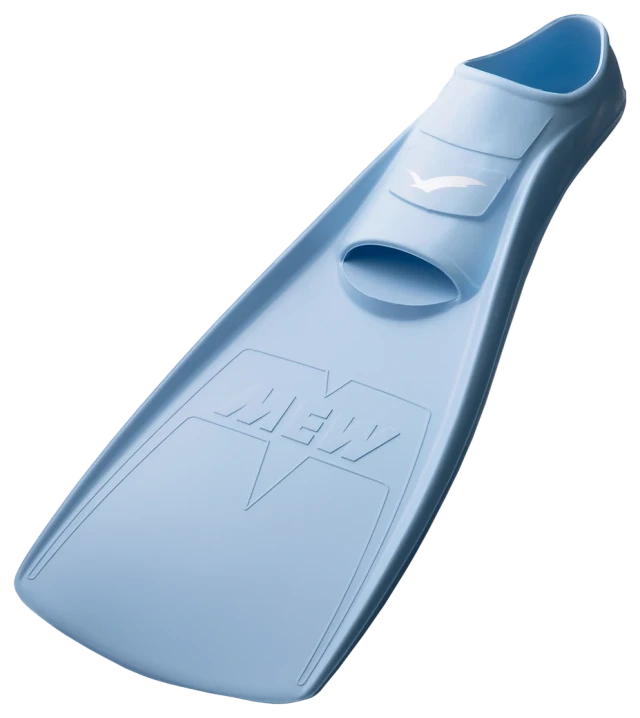
- GULL says the MEW answers both strong and gentle kicks, so it suits power divers and occasional divers alike.
- GULL calls BARRACUDA the world's first ultra-long rubber fin and recommends it for expert divers. Watch our review.
If you're unsure, skip anything that feels too long or heavy for you, try several, and pick the pair that feels easy and controllable.
Rubber fins or other materials?
Brands build fins from different materials, and each says this about its own:
- Rubber: every GULL fin we sell is a rubber fin. GULL mixes rubber hardnesses in one fin: the SUPER MEW has soft rubber in the pocket, the hardest rubber in the ribs and a slightly softer stiff rubber in the blade. Apeks builds the RK4 in one-piece rubber and the RK3 in thermoplastic rubber.
- Other materials: SCUBAPRO's Seawing fins and Aqualung's Storm are made of Monprene, and Aqualung says making the Storm in this single material gives it durability and strength. Dive Rite says its XT Fins are lighter than traditional rubber fins, which helps prevent cramping on long swims.
Choose the material the same way as everything above: kick, then pick the pair that feels easy and controllable.
Best dive fins for each kind of diver
We're an authorised dealer for GULL, SCUBAPRO, Apeks, Dive Rite and Aqualung. No single brand is best for everyone, so here is every fin we sell, sorted by use as each brand describes it. Prices are the prices on our site when this guide was written; the product page always has the latest, and we confirm price and stock on LINE when you order.
New divers and first fins
- GULL MEW · ฿4,290: a full-foot fin GULL calls easy to use from beginners to veterans. Wear it barefoot or with MEW Boots, for skin diving and scuba. The thin rubber pocket goes on and off easily, even if you have never worn full-foot fins. Watch our review.
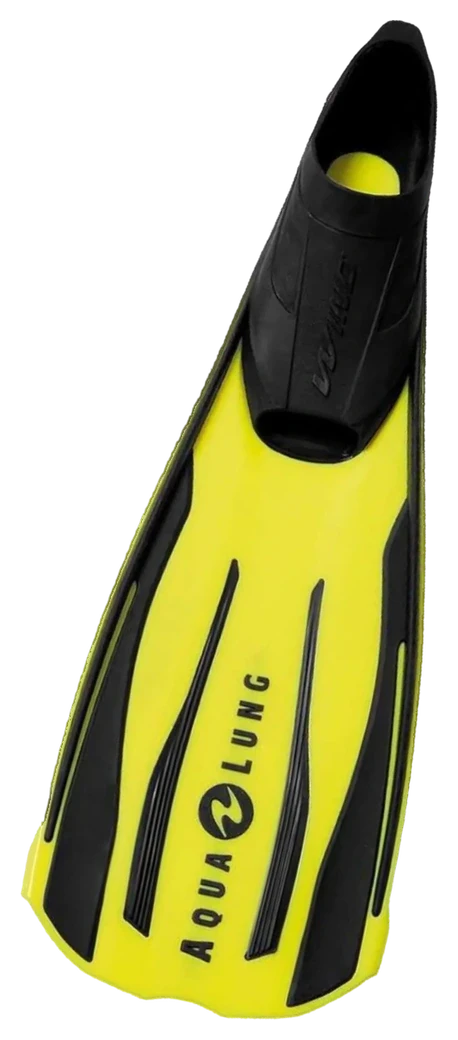
- Aqualung Wind · ฿1,790: Aqualung's entry-level full-foot fin for scuba and snorkelling in warm water, worn barefoot. Aqualung calls it lightweight and ideal for travel.
- GULL EMDEN · ฿2,890: GULL's basic short-blade rubber fin, easy to move in on the surface and underwater, with a soft pocket that slips on and off. GULL made it for relaxed snorkelling and new scuba divers; size XS fits 20–22 cm bare feet.
- GULL MEW CYPHER · ฿4,790: GULL's open-heel fin for any skill level, for divers who prefer a lighter, agile kick. The blade is shorter than ordinary fins, and it works for skin diving and scuba.
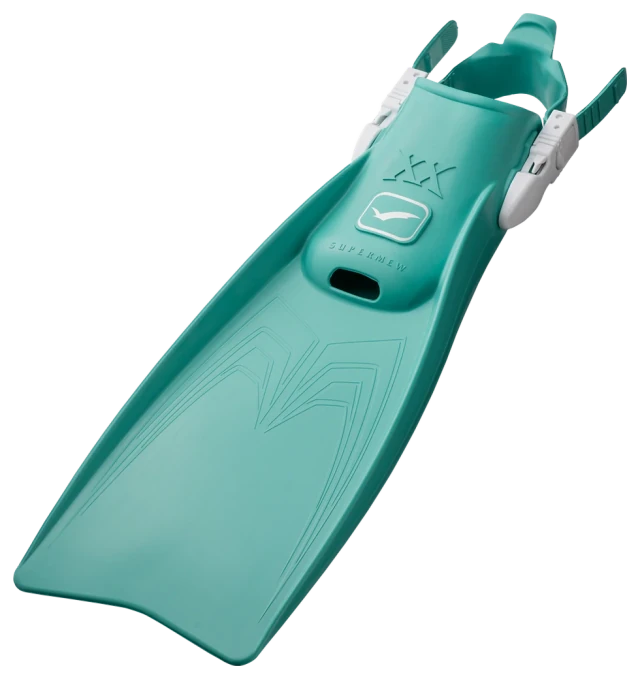
- GULL SUPER MEW XX · ฿6,490: the SUPER MEW as an open-heel fin for boots. GULL says it keeps the feel of the full-foot fin, with a shorter blade so every diver can use it comfortably. Watch our review.
- Aqualung Phazer · ฿5,990: an open-heel fin for boots that Aqualung designed for balance and power at any experience level, with an easy bungee strap.
Warm water, bare feet or travel
- Aqualung Stratos 3 · ฿2,990: a full-foot fin for warm water, no boots required. Aqualung moved the blade's bending point back and says this gives a more powerful kick with less effort.
- Aqualung Storm · ฿3,480: an open-heel fin made to be worn barefoot. Aqualung calls it exceptionally light and ideal for travel, in junior and adult sizes.
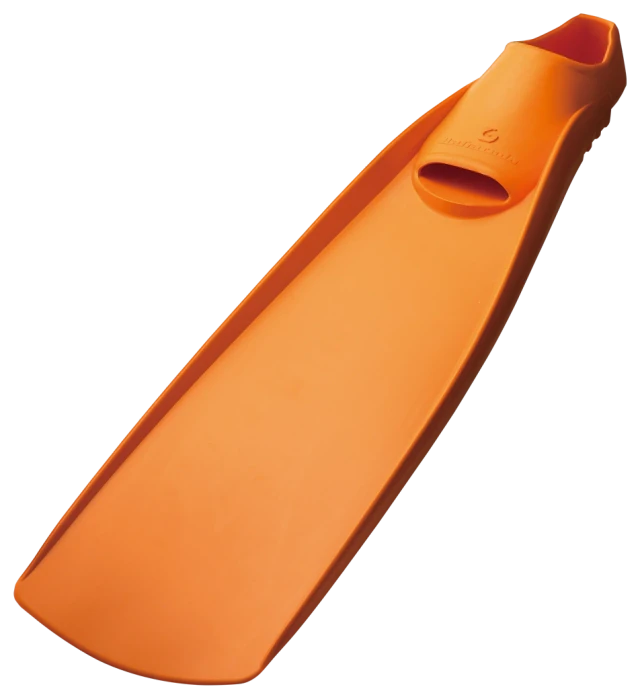
- GULL SAFE MEW · ฿4,490: the MEW in an orange GULL chose to be easy to see at the surface or if a rescue is needed, with a slightly stiffer blade.
- GULL SUPER SOFT MEW · ฿4,090: a soft-rubber MEW that GULL made only for skin diving and snorkelling in shallow water. Not a scuba fin.
More power
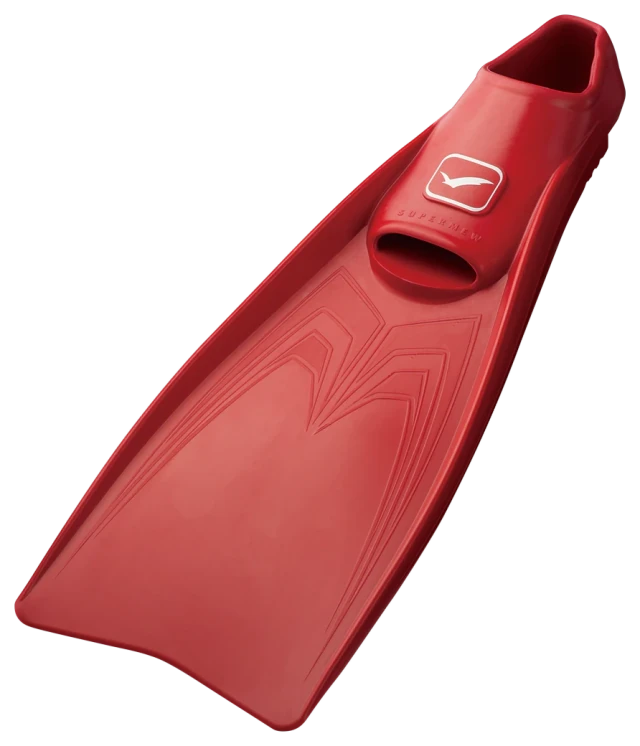
- GULL SUPER MEW · ฿6,390: a full-foot fin for scuba. GULL recommends it for divers who want power that matches their kick, 1:1. GULL sizes it for its own boots, not bare feet.
- GULL HARD MEW · ฿4,490: the MEW in a hardened rubber that GULL made for more power, with the same soft pocket.
- SCUBAPRO Seawing Nova · ฿8,735: an open-heel fin SCUBAPRO describes as blade-fin power with split-fin kicking comfort. Comes in XS for small feet.
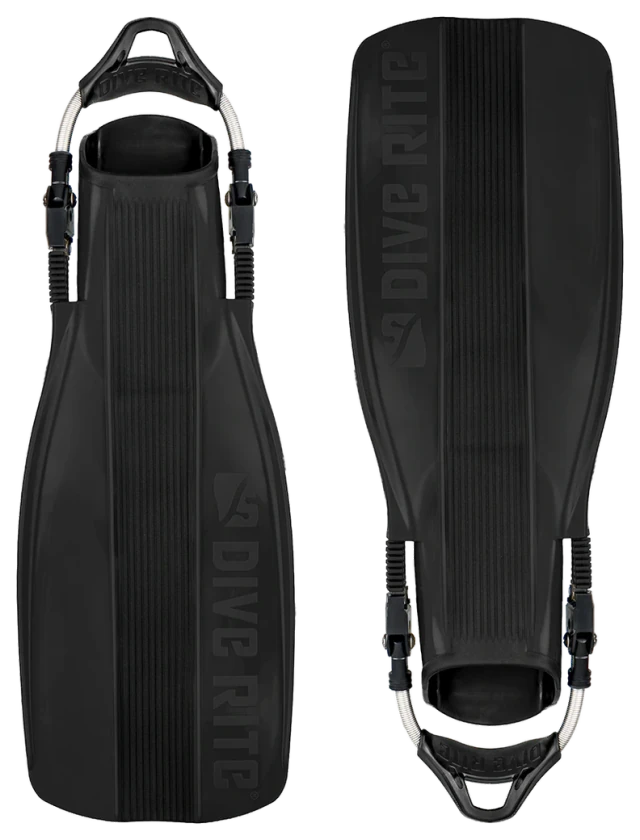
- DIVE RITE XT Fins · ฿8,750: open-heel fins with a stainless steel spring strap for quick on and off. Dive Rite says they fin efficiently in strong currents, suit a range of kicks, and are lighter than traditional rubber fins. Watch our review.
Strong currents, heavy loads, experienced divers
The brands don't describe these models as beginner fins. If you're just starting, look at the first group, or ask us on LINE.
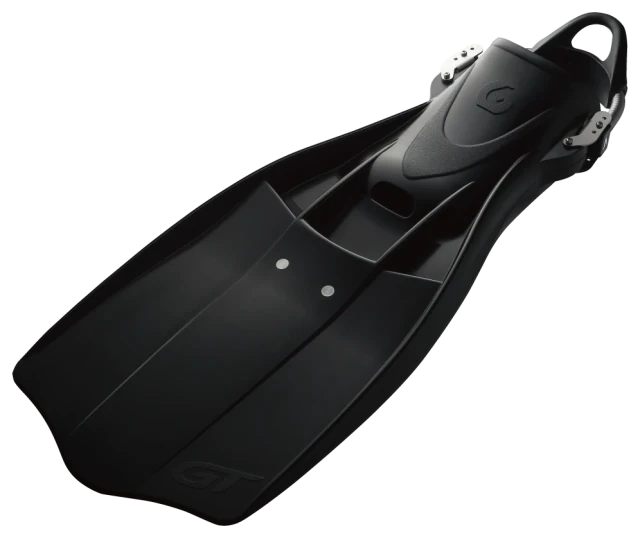
- GULL GT · ฿15,990: a semi-long, wide rubber jet fin GULL pitches for heavy loads and tough currents. The pocket takes most drysuit boots, and the spring strap adjusts by up to 4 cm. Watch our review.
- GULL BARRACUDA · ฿14,900: an ultra-long rubber fin GULL recommends for experts. Professional is the hard rubber; Standard is softer, for lighter, easier kicks.
- GULL WARP FIN · ฿13,990: GULL's long-blade full-foot fin for experienced divers who want strong propulsion in currents. The colour sets the stiffness: black and white are hard spec, red and yellow standard spec.
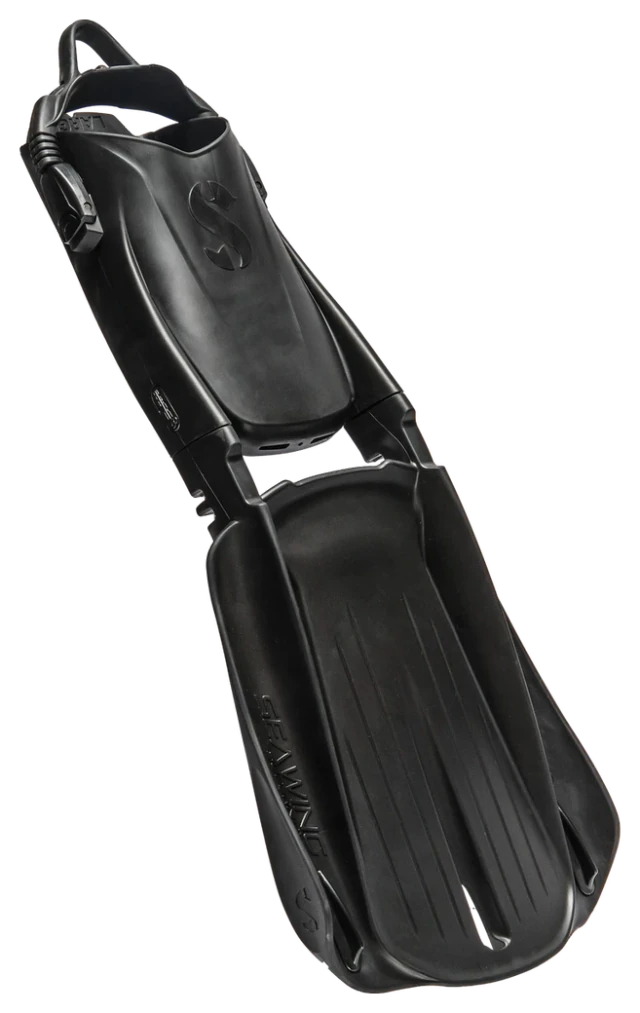
- SCUBAPRO Seawing Supernova · ฿9,700: SCUBAPRO lists it as a 2021 Red Dot winner, made for avid recreational and professional divers. The central panel sets the blade angle to your kick, the blade and pocket come apart for travel, and a full-foot pocket is sold separately. Watch our review.
- SCUBAPRO Seawing Nova Gorilla · ฿9,860: looks like the Seawing Nova, with a stiffer blade. SCUBAPRO made it for divers who like a stiffer fin and calls it a good choice for tech divers.
Torn between the SUPER MEW XX and the Seawing Supernova? See our SUPER MEW XX vs Seawing Supernova comparison.
Cold water, drysuits or tight spaces
- GULL SUPER MEW XX DRY · ฿7,490: the SUPER MEW XX tuned by GULL for drysuits. Higher-density rubber puts the weight at your ankles, so you can leave the ankle weights behind. Spring straps fitted.
- GULL MANTIS DRY FIN · from ฿4,990: the drysuit version of GULL's MANTIS strap fin. A weightier rubber puts the weight low on the leg, so you keep your balance without ankle weights. Jet holes, a bigger foot pocket, spring or rubber straps; GULL made it for divers confident in their leg strength.
- Apeks RK4 · ฿9,490: a technical fin Apeks designed for confined spaces and overhead environments, for precise frog kicks and back-finning, with wetsuits or drysuits.
- Apeks RK3 · ฿6,690: an over-sized pocket for drysuit boots and spring straps that are easy with cold hands or thick gloves. Apeks builds it for harsh environments.
- Apeks RK3 HD · ฿7,490: a stiffer, negatively buoyant RK3 that Apeks calls ideal for wetsuit diving.
- Aqualung Storm Max · ฿4,150: Aqualung's long open-heel fin for boots, tagged for cold water, made in a single material, Monprene.
Fins for warm water, shore entries and drysuits
- Mostly warm-water boat diving: full-foot fins are light and simple.
- Shore entries over rock: boots and open-heel fins protect your feet.
- Wetsuit and drysuit diving: PADI says you may need two pairs, since drysuit boots usually need a larger pocket. Dive Rite sizes the XT for normal wetsuit boots and suggests going up one size for oversized drysuit boots.
How to fit fins and choose the right size
Fitting checklist
- For open-heel fins, wear the boots you'll actually dive in. Thicker boots may mean a bigger fin size (PADI).
- Your foot should go all the way into the pocket without your toes touching, with no pinching or sore spots (PADI).
- Shake your foot in every direction: no excess movement, pinching or rubbing (PADI).
- Try several styles, or borrow your buddy's (PADI).
- Check you can put them on and take them off yourself, especially in gloves.
- Use the brand's size chart as a guide only. GULL itself says to confirm size with an actual trial fitting.
Fin care after diving
PADI recommends rinsing fins in fresh water after each use, storing them cool, dry and out of the sun, checking straps for tears, and carrying a spare strap, since straps other than spring straps will break one day. Mark your fins, too, so they don't get mixed up on a busy boat.
Bottom line
Decide where you'll dive, choose full-foot or open-heel, then match blade length and stiffness to your legs, and always try before you buy. For an overview of many models, watch our TOP 10 FINS 2025, and if you're new, our beginner tips.
FAQ
What are dive fins called in English?
Fins. PADI says to call them fins, not flippers.
What do fins do for a diver?
They help you move easily underwater. PADI says scuba fins should move you and your gear through the water with minimal effort and maximum efficiency.
Which dive fin brand is best?
No single brand is best for everyone: pick by where you dive and how strong your kick is. If you're new, GULL calls the MEW easy to use from beginners to veterans, and Aqualung calls the Wind an entry-level fin. See "Best dive fins for each kind of diver" above for the rest.
How much do dive fins cost?
When this guide was written, the fins on our site ran from ฿1,790 (Aqualung Wind) to ฿15,990 (GULL GT). Each model's price is in the list above; we confirm price and stock on LINE when you order.
Should beginners get full-foot or open-heel fins?
It depends on where you'll dive most. PADI's rule of thumb: full-foot fins if you dive only in the tropics from a boat, adjustable open-heel fins anywhere else.
Do open-heel fins need boots?
Usually, yes. Bring the boots you'll actually dive in when you try fins on, since thicker boots may mean a bigger fin size (PADI). The exception is a model its brand makes for bare feet, such as the Aqualung Storm.
Can fins cause leg cramps?
They can. PADI warns that fins that feel too long or heavy tend to cause cramps and poor stability, so try several and pick the pair that feels easy.
Paddle fins or split fins?
Paddle fins are generally stiffer: more work, but good control. Split fins are softer and kinder on weaker legs, but less precise for turning, reversing and frog kicks (PADI).