How to Choose a Dive Light: Lumens, Beam, Burn Time, Prices
How to choose a dive light: primary and backup, lumens, beam angle, burn time, battery and light signals, from PADI and DAN, plus our 7 dive lights with prices.
Which dive light is best? The short answer: no single light is best for every dive. DAN (Divers Alert Network) says there is no one-size-fits-all dive light, so each diver should choose by their own goals and needs. At night you need a primary light and a backup. By day, a light brings back the colours the water filters out and shows what hides in crevices. A cave diver needs a longer burn time than a diver on a daytime reef dive.
This guide sums up how to choose a dive light, based on PADI's and DAN's advice: primary and backup lights, brightness (lumens), beam angle, burn time, batteries and light signals. Model details come from the official Aqualung and Dive Rite sites. At the end you'll find the 7 dive lights we carry, with the prices on our site.
Why carry a dive light, even by day
DAN calls the dive light essential equipment that can help on most dives, not only at night.
- At night, or where there is no light at all, such as in a cave: the light shows you your surroundings, and it is how you talk to other divers.
- By day: DAN says a light restores colours lost with depth, helps you take better photos of underwater life, and lights up small creatures under ledges or in crevices. Aqualung explains that even in the shallows the water filters out warm colours, so the scene often looks only blue or green; shine a light on it and the reds and yellows of marine life come back.
- In an emergency: DAN says a light can signal for help below or above the water. At the surface it can get a boat's attention, if conditions let it be seen from far away.
How to choose a dive light
DAN advises learning before you buy, because high-quality dive lights are expensive, and buying from a reputable manufacturer, whose products have proven quality and reliability and who can offer trustworthy repairs and support. Then go through these points one by one.
1. Primary and backup: carry at least two lights at night
PADI's article on night diving advises carrying not one light but two, and calls at least two lights standard practice. The writer says more than once their primary light gave out halfway through a dive, though they were sure they had charged it fully. A backup light gives you peace of mind that you won't be left in the dark. The same article suggests a small strobe or a glow stick on your BCD, so your buddy or the boat crew can spot you more easily if your main light fails.
Another PADI article says you need a good primary light for night diving, and that a small pocket light is useful both as a backup and for peering into crevices by day.
Dive Rite names two of our lights as primary lights: the FX40 handheld and the GX40 canister light. For the others, the brands don't say whether they are a primary or a backup light. Check the burn times (step 5) and match them to your dive.
2. Handheld or canister
DAN describes two main types:
- Cordless handheld lights: what most recreational divers use. They are easy to carry, simple to use and usually reasonably priced.
- Canister lights: often preferred by technical divers for their longer burn times, and because you can let go of them without losing the light head. DAN adds that some cordless lights now have specifications close to canister lights, so many technical divers are switching.
DAN also says LED lights are becoming more popular for their powerful beams, while some divers prefer HID lights, whose beams work well in murky water.
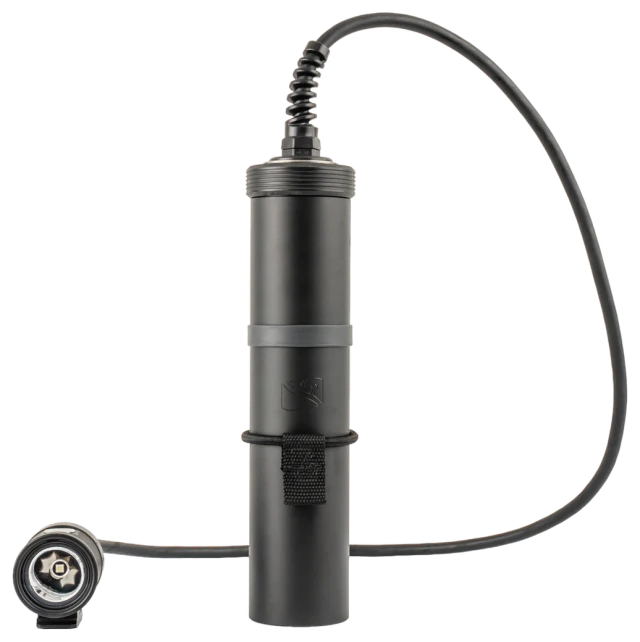
Every light we carry is an LED light. One is a canister light: the Dive Rite GX40 puts the FX40's light head on a cord to a battery canister, with up to 3X the burn time of the handheld according to Dive Rite. Dive Rite calls the CX3+, the FX40 and the BX2 handheld lights, and Aqualung's photos show the Seaflare lights as single torches with a lanyard.
3. Brightness: how many lumens does a dive light need?
DAN explains that brightness is measured in lumens and coverage in lux (lumens per square metre), and that how much you need depends on how you'll use the light. DAN gives no single number that suits everyone. For our lights, the brands give:
- Dive Rite FX40 and GX40: 2400 lumens (the same light head)
- Dive Rite CX3+: up to 1900 lumens
- Aqualung Seaflare Pro Pack: 1,800 lumens
- Dive Rite BX2: up to 1000 lumens
- Aqualung Seaflare Mini: 900 lumens
- Aqualung Seaflare: Aqualung's page gives no output figure
On the CX3+ spec sheet, Dive Rite also says how it measures: peak output is measured within 30 seconds of switching on with freshly charged batteries, and it slowly tapers in use. Aqualung doesn't say how it measures, so compare lumen figures across brands only roughly.
4. Beam angle: narrow or wide
DAN says the beam angle is crucial when you use your light to communicate: the tighter the beam, the easier it is to read signals. This matters most where there is no ambient light, or on technical dives that need clear team communication.
- Dive Rite FX40 and GX40 have a tight 4° beam from a fixed-focus smooth reflector. Dive Rite says it lets you signal your buddy clearly in demanding technical environments.
- Dive Rite CX3+ has a narrow 8° beam from a smooth, fixed-focus reflector. If you want a wide beam, this isn't the light for you.
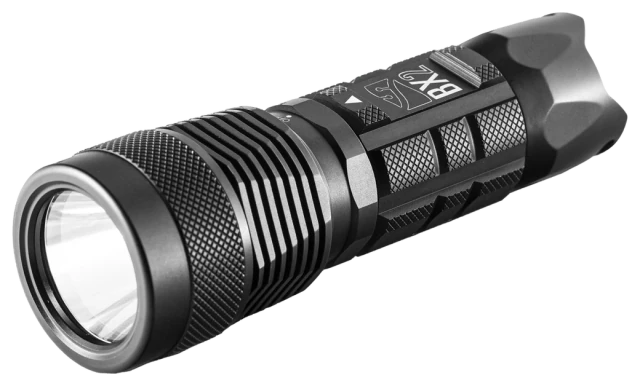
- Dive Rite BX2 has a 6° beam. Dive Rite says it is crisp and focused with ample side spill, good for signalling or exploring under reef ledges.
- Aqualung gives no beam angle for any of the three Seaflare lights. They take colour beam deflectors that Aqualung says help reduce light pollution, and the Seaflare and Seaflare Mini pages add that they do so without blinding others.
5. Burn time and battery
DAN says the use decides the burn time you need: a cave diver, for example, needs longer burn times than an open-water diver on a daytime reef dive. For our lights:
- Dive Rite CX3+: High 1900 lumens 3 h · Medium 980 lumens 5.5 h · Low 500 lumens 11 h · Very Low 90 lumens 28 h · Strobe 12 h. It uses a protected 5000 mAh 21700 Li-ion battery and charges on a magnetic quick-disconnect cable in about 2.5 hours. An LED shows the battery left (green 100–60% · red 60–20% · flashing red below 20%). Dive Rite gives ANSI runtimes: continuous runtime until the light drops to 10% of its starting output.
- Dive Rite GX40: from Dive Rite's table, Expedition canister Turbo 4.5 h · High 10 h · Medium 22 h · Low 112 h; Short canister Turbo 2.8 h · High 6.7 h · Medium 16 h · Low 74 h. It charges with the included smart charger in about 4 hours (Expedition) or 3 hours (Short).
- Dive Rite FX40: we don't quote its burn times, because Dive Rite's FX40 page and the FX40's spec sheet give different figures. Per the note on Dive Rite's page, after the low-battery warning it steps down to low and runs at least 5 more hours. The batteries are replaceable and charge over USB-C without coming out. Ask us on LINE for the burn times.
- Dive Rite BX2: 1+ hour at peak brightness and 3+ hours in total, from a replaceable 3500 mAh 18650 Li-ion battery with built-in micro-USB charging.
- Aqualung Seaflare Pro Pack: 3 h on high · 4 h on medium · 10 h on low. The page gives no battery type or charging method.
- Aqualung Seaflare Mini and Seaflare: Aqualung's pages give no burn time, battery type or charging method. Need them before you order? Ask us on LINE.
6. Depth rating from the brand
Dive Rite rates the FX40 and GX40 to 152 m (500 ft), the BX2 to 150 m (492 ft) and the CX3+ waterproof to 100 m (330 ft). Aqualung's pages give no depth rating for any of the three Seaflare lights. Need it before you order? Ask us on LINE.
7. Handles, lanyards and carrying
DAN says to think about mounting too: some divers use a hard or soft Goodman handle, others a hand strap, and lights can also go on a mask strap or a helmet. PADI suggests using clips to secure your light and anything else you don't want to drop during a dive.
- Dive Rite CX3+ comes with a lanyard, battery, magnetic charging cable and EVA case. It weighs 334.5 g with the battery, and a lockout mode stops it turning on by accident while diving or in transit.
- Dive Rite FX40 and GX40 come with a soft elastic handmount plate with Dive Rite's QRM mounting system, and a padded carrying case (FX40) or bag (GX40).
- Dive Rite BX2 comes with a wrist lanyard, charging cable and carrying case, and is QRM compatible for hands-free use. Its knurled body grips securely even with gloves, according to Dive Rite.
- Aqualung Seaflare Mini and Seaflare have a wrist lanyard in Aqualung's photos, and the Seaflare Pro Pack sits in a black zip case. Aqualung's pages don't list what comes in the box or the pack.
Dive light signals to know
PADI says that on a night dive your light becomes your main way to communicate. Before you get in, check that you and your buddy are both comfortable with these light signals:
- A large circle with the light = OK
- Quick side-to-side movements = problem. DAN also says a rapid back-and-forth motion underwater means a diver in distress.
- Shine the light on your hand and make a normal hand signal
DAN's light etiquette: keep the beam forward and as steady as you can, move it slowly, and avoid jerky movements that others may take for an emergency signal. Take care not to shine it into other divers' eyes. The lead diver in a group should think about dimming their light, so the lights of those following are easier to see.
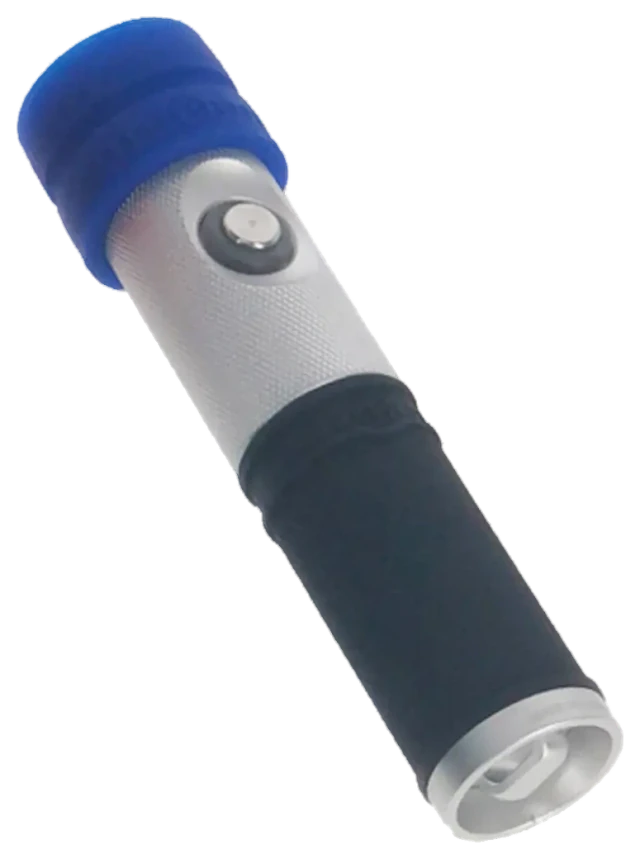
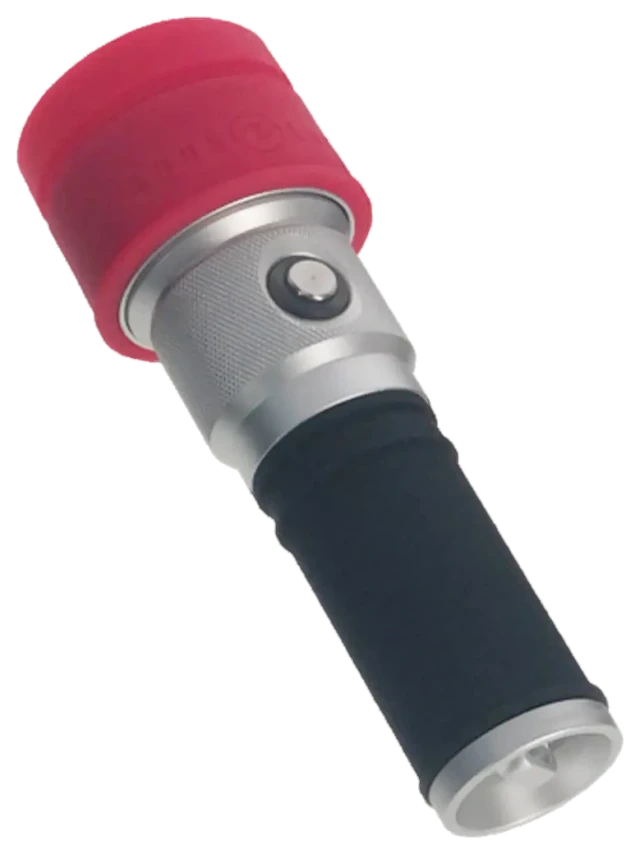
PADI also suggests something that makes you easy to recognise, such as a marker light, a strobe or a glow stick, so your buddy can find you quickly without shining lights at each other. On our lights, the blue, yellow, pink or glacier colour deflectors of the Aqualung Seaflare and Seaflare Mini let other divers tell which light is yours at night, and the Dive Rite CX3+ has a strobe mode.
Before the dive, and caring for your light
- Before a trip: PADI suggests charging your dive lights, switching them on and pressing every button to make sure they work, and checking the clips that hold them. Loose gear can damage the underwater environment or disappear altogether.
- Burn test every 6–12 months: DAN suggests fully charging your light, switching it on and putting it in a bucket of water, then recording how long the battery lasts and comparing it with earlier tests. That tells you when it's time to replace the battery.
- Washing and storing the rest of your gear: see How to wash and store your dive gear.
Which dive light should a beginner start with?
The brands don't rate any of our seven lights by experience level, though Dive Rite calls the BX2 an essential tool for every diver. Three pointers from PADI and DAN:
- DAN says most recreational divers use cordless handheld lights, which are easy to carry and simple to use.
- If you want to start night diving, PADI says you can take the Night Diver course after Open Water, and that it's a great option if you'd like your first dive in the dark under an instructor's supervision. The course covers diving and communicating with a light, navigation and night diving safety.
- In our Scuba gear list, a dive light is one of the extras that can come later. See there what to buy first.
Which dive light is best? Our lights and who they suit
No light is best for every dive. Below is what each brand says its light does. Prices are the prices on our site on 13 November 2026; the product page always has the latest price. To see one brand's whole range: Aqualung · Dive Rite
- Dive Rite BX2 · ฿3,590: a compact handheld, up to 1000 lumens in a 6° beam with side spill, 1+ hour at peak and 3+ hours in total, twist-on switch, 150 m depth rating. Dive Rite calls it an essential tool for every diver. Not for long dives on full power.
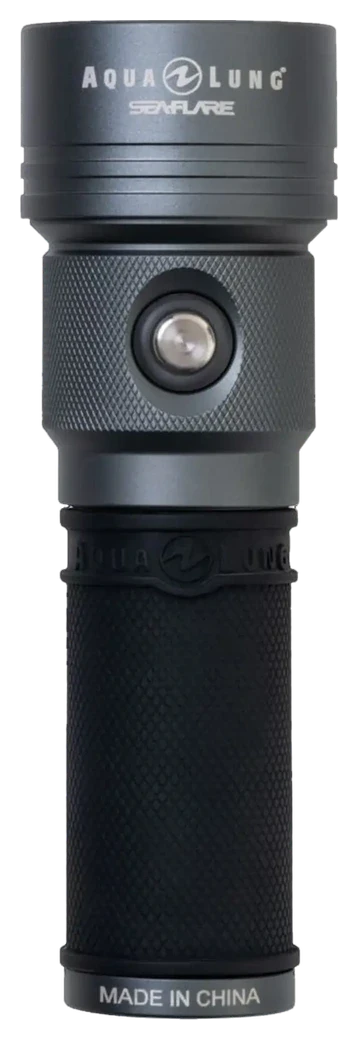
- Aqualung Seaflare Mini · ฿4,990: Aqualung calls it compact with a punch, with 900 lumens in a tiny size and weight. It takes the colour deflectors. PADI describes a small light as useful as a backup and for peering into crevices by day, but Aqualung doesn't call the Mini a backup light and gives no burn time, depth rating or battery details.
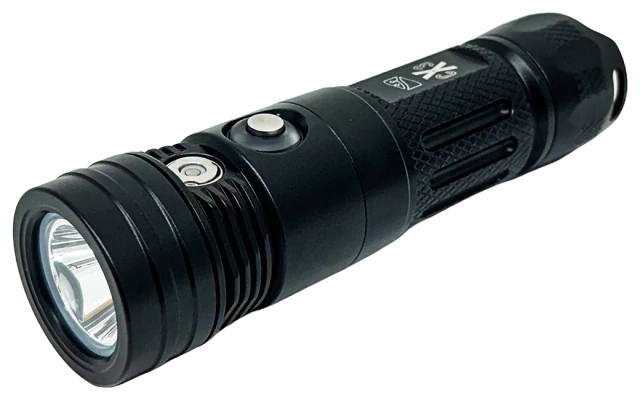
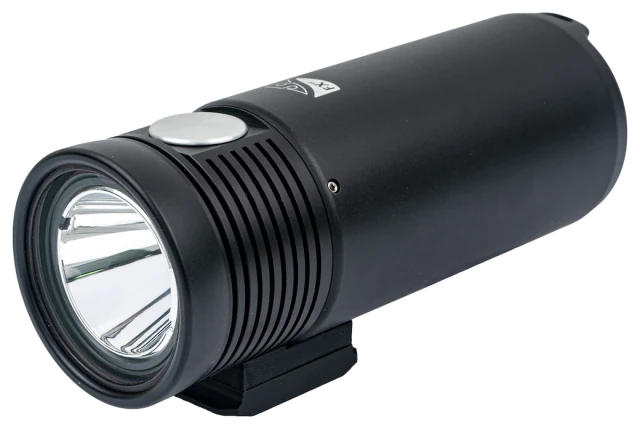
- Dive Rite CX3+ · ฿7,490: a narrow 8° beam, 1900 lumens, four levels and strobe, 3 h on High up to 28 h on Very Low, magnetic charging, lockout, waterproof to 100 m. For divers who want a narrow beam, which DAN says makes signals easier to read. Not for divers who want a wide beam.
- Aqualung Seaflare · ฿8,390: takes blue, yellow, pink or glacier colour deflectors so your buddies can tell you apart at night. The deflectors are silicone, glow in the dark, are collapsible and don't blind others (according to Aqualung). The page gives no output, burn time, depth rating or battery details, so ask us before you order.
- Aqualung Seaflare Pro Pack · ฿9,890: 1,800 lumens and three levels: 3 h on high, 4 h on medium and 10 h on low. Silicone, glow-in-the-dark, collapsible colour deflectors. In Aqualung's photos, the pack's light is not the same light as the Seaflare, and it sits in a black zip case. The page doesn't list what the pack contains or give a depth rating.
- Dive Rite FX40 · ฿19,890: Dive Rite's handheld primary light, 2400 lumens in a tight 4° beam, piezo button with no moving parts, USB-C charging, handmount included, rated to 152 m. For divers who want a bright, narrow-beam primary with no cord or canister. Ask us for burn times before you order.
- Dive Rite GX40 · ฿36,790: the FX40's 2400-lumen, 4° head on a battery canister (Expedition or Short, straight or 70° cord), 4.5 h on Turbo with the Expedition canister, rated to 152 m. For divers who want a canister primary light and long burn times. Not for divers who don't want a cord and canister.
To compare specs line by line, see Compare dive lights. In the table, "not listed" means the brand's page doesn't give it.
| Model | Max output | Beam angle | Burn time on high | Depth rating |
|---|---|---|---|---|
| Dive Rite BX2 | 1000 lumens | 6° | 1+ h at peak | 150 m |
| Aqualung Seaflare Mini | 900 lumens | not listed | not listed | not listed |
| Dive Rite CX3+ | 1900 lumens | 8° | 3 h | 100 m |
| Aqualung Seaflare | not listed | not listed | not listed | not listed |
| Aqualung Seaflare Pro Pack | 1,800 lumens | not listed | 3 h | not listed |
| Dive Rite FX40 | 2400 lumens | 4° | ask us (Dive Rite's figures differ) | 152 m |
| Dive Rite GX40 | 2400 lumens | 4° | Turbo 4.5 h (Expedition) · 2.8 h (Short) | 152 m |
Before you order, message us on LINE. Tell us whether you dive by day or at night, and whether you want a primary or a backup light. We ship within Thailand, free from ฿2,000; below that, a shipping fee applies. Details are on our shipping and returns page.
Bottom line
Start with the dives you do. By day, a light brings back colour and shows what's in the crevices. At night, carry at least two lights. Then look at brightness, beam angle, burn time and battery. Before you get in, agree on light signals with your buddy, and don't shine your light into other divers' eyes. Not sure which light suits you? Ask us on LINE.
FAQ
How much does a dive light cost?
On our site on 13 November 2026, from ฿3,590 (Dive Rite BX2) to ฿36,790 (Dive Rite GX40, a canister light). Handhelds go up to ฿19,890 (Dive Rite FX40). Each model's price is in the list above; we confirm price and stock on LINE when you order.
Which dive light brand is best?
No light is best for everyone. DAN says each diver should choose by their own goals and needs, and buy from a reputable manufacturer. Go through steps 1–7 above, then compare them with our lights in the list.
How many lumens does a dive light need?
DAN gives no single number; it says the brightness you need depends on how you use the light. Of our lights, Dive Rite lists the FX40 and GX40 at 2400 lumens, the CX3+ at 1900 and the BX2 at up to 1000, and Aqualung lists the Seaflare Pro Pack at 1,800 lumens and the Seaflare Mini at 900 lumens.
How deep can a dive light go?
Go by the brand's rating. Dive Rite rates the FX40 and GX40 to 152 m, the BX2 to 150 m and the CX3+ waterproof to 100 m. Aqualung gives no depth rating for the three Seaflare lights; ask us on LINE.
How many lights do I need for a night dive?
PADI's article says at least two, a primary and a backup, is standard practice, and suggests a small strobe or a glow stick on your BCD as well.
Do I need a dive light on a day dive?
A light helps by day as well as at night. Aqualung explains that even in the shallows the water filters out warm colours; shine a light and the reds and yellows come back. DAN says a light also helps you take better photos and spot small creatures in crevices.