Wetsuit Buying Guide: Thickness, Style and Fit for Thailand
Wetsuit buying guide: what a wetsuit does, what thickness for warm water, full suit vs shorty vs two-piece, women's cuts, fit, wetsuit vs drysuit, and our models.
PADI counts a wetsuit among the big purchases a diver makes, next to a dive computer and regulators, and DAN calls it perhaps the most personal piece of gear you own. Once you start shopping, the questions come fast: what thickness, full suit or shorty, is a women's suit really different, how tight is right, and how is it different from a drysuit?
This guide sums up the advice of PADI and DAN (Divers Alert Network). Model details come from each brand's official site, and prices from our own product pages.
What is a wetsuit, and what does it do?
PADI calls wetsuits exposure protection: underwater you're exposed not only to water that draws heat from your body, but also to things that can scrape, cut or sting. So a wetsuit has two jobs.
- Keeps you warm: it's called a wetsuit because you still get wet. A thin layer of water gets in, your body heats it quickly, and the neoprene insulates you from the cooler water around you (PADI). DAN adds that warmth depends mostly on limiting water circulation: the closer the fit, the less water flows through.
- Protects your skin: PADI says a wetsuit helps protect you from cuts, scrapes and stings. DAN adds that neoprene is a comfortable buffer against heavy gear and tight straps. Even in a suit, keep your buoyancy under control and stay off the reef.
What thickness wetsuit do you need?
PADI says thickness is the main factor in warmth, and the three most common thicknesses are:
| Thickness | PADI matches it with |
|---|---|
| 3 mm | Warm water |
| 5 mm | Temperate water |
| 7 mm | Cold water |
Other numbers to compare with:
- PADI says a wetsuit can generally keep you warm enough in water of about 10–32°C, though both ends vary from diver to diver.
- Below 10°C, PADI says you need a drysuit.
- PADI says shorties are best for water of 27°C and above.
- DAN notes that everyone feels the cold differently: the colder the water, the thicker the suit or the more layers you need, such as a hooded vest or a shorty worn over a full suit.
An example from Thailand: PADI gives Koh Tao an average water temperature of 28–30°C and lists it among places where you can dive without a wetsuit. Even so, DAN says a wetsuit is essential in all but the warmest conditions, and even then it protects your skin from scrapes. PADI also notes that even on a tropical trip, staying in the water longer can leave you uncomfortably cold.
For very warm water there is also the body suit, which PADI describes as designed for very warm water diving or as an extra layer under another suit, with good sunburn protection.
Full suit vs shorty vs two-piece
PADI lists four wetsuit styles, and says style matters for warmth and versatility too.
- Full suit: covers your arms and legs, usually with a long front or back zip, and comes in a range of thicknesses for different water temperatures (PADI).
- Shorty: a one-piece suit, usually with short sleeves and thigh- or knee-length legs, with around 3 mm of neoprene on the torso (PADI).
- Two-piece: PADI says wearing both pieces together gives you double the insulation, and you can wear them separately, so you get two suits in one.
- Semi-dry: a wetsuit with better seals to cut water entering and leaving the suit (PADI). PADI stresses that you still get wet, unlike in a drysuit.
Features that help in the water
- Wrist and ankle seals: cut water entry and circulation inside the suit (PADI).
- Ankle or wrist zips: make the suit easier to get into and out of (PADI).
- Kneepads and anti-abrasion panels: kneepads are common, some suits add elbow pads, and many have anti-abrasion material on the shoulders and seat (PADI).
- Preshaped arms and legs: bent knees and elbows add comfort, and the neoprene stretches less as you move, so the suit wears more slowly (PADI).
- Pockets: on the thigh, calf or arm, for a slate or keys (PADI).
- Attached hood: stops cold water flowing in through the collar as you swim (PADI).
- Front or back zip: DAN says most wetsuits zip at the back, some at the front, which gives a seamless surface where the tank sits on your back.
Women's vs men's wetsuits
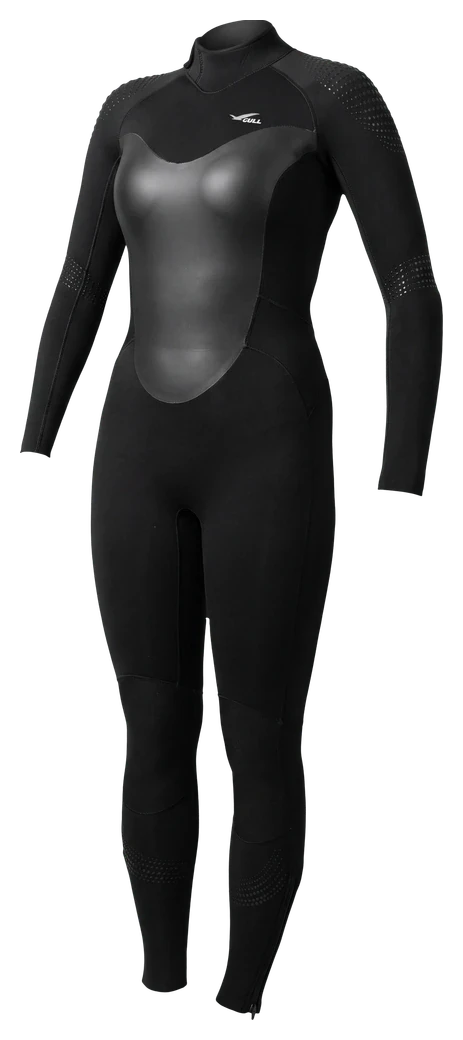
PADI says wetsuits are no longer unisex, and recommends that women choose a women's suit, designed to better fit the female form.
So the same size letter doesn't mean the same body. On GULL's 3MM FULL SUIT size charts, a women's M is 163–169 cm tall with an 84 cm chest, while a men's M is 169–175 cm tall with a 92 cm chest. Measure yourself and check the chart of the exact model every time.
Every wetsuit on our site comes in both a men's and a women's model.
How should a wetsuit fit?
Try-on checklist
- Snug but not overly tight, with no big gaps anywhere (PADI).
- You can move and breathe; the suit doesn't restrict your movement or breathing (PADI).
- Don't size up just because your chest feels pressed. DAN says beginners tend to choose suits that are too loose, which lets too much water flow through, and a poor fit undoes the warmth of even the best suit.
- A suit you try on dry will give slightly once it's in the water (PADI).
- Some effort the first time is normal, so take your time. If it's a real struggle, you may need a larger size (PADI).
- Try several suits from several brands. Narrow down by fit and comfort first, then decide on style, colour and features (PADI).
Hard to put on? Try this
- Wear a thin dive skin or scuba socks underneath. The socks also stop boots or fins from rubbing blisters (PADI).
- Use water: if it's not too cold, put the suit on in the water, or run water from a shower or hose into it so it slides on (PADI).
- Ask your buddy to pull up the back while you pull up the front (PADI).
- Very stretchy suits, or suits with a low-friction lining, go on more easily than stiff ones (PADI).
Hot boat decks: watch for overheating
DAN explains that neoprene holds moisture and heat. Sitting fully suited and zipped on a boat deck or on shore in humid heat can lead to heat stress, with dizziness and nausea. DAN's advice:
- Finish suiting up just before you put on your BCD and get in the water.
- After the dive, take off your gear and at least the top half of your wetsuit so your body can vent heat.
- Drink enough water, and limit your time in the sun while wearing the suit.
Wetsuit vs drysuit
PADI's short version: wetsuits stay wet, drysuits keep you dry. But there's more to it.
| Wetsuit | Drysuit | |
|---|---|---|
| Warmth from | Neoprene and a thin layer of water your body warms | Air inside the suit and the clothing you wear under it |
| Best for | Warmer water; popular in tropical and temperate destinations | Cold water; needed below 10°C |
| Fit | Close-fitting, easy to move in | Looser and bulkier, with wrist and neck seals, a waterproof zip and built-in boots or socks |
| Extra training? | No: put it on, adjust your weights for the neoprene's thickness and dive | Yes, such as the PADI Dry Suit Diver course, because the air inside compresses and expands with depth |
| Cost and lifespan | Cheaper; may need replacing after about five years | More expensive; well maintained, it can last about three times as long |
| After the dive | Fresh water, maybe wetsuit shampoo, and sensible storage | The same, plus zip lubrication and, over time, new seals, boots and zips |
Everything in the table comes from PADI, which also notes that a premium wetsuit can cost as much as an entry-level drysuit. We don't sell drysuits at the moment.
Wetsuit care
- Rinse it in fresh water after every dive, and now and then give it a proper wash with wetsuit soap (PADI).
- Turn it inside out and hang it somewhere cool, dry and out of the sun (DAN). A wide plastic or wooden hanger keeps the shoulders from creasing (PADI).
- If you must fold it, fold it gently with the zip on top, or as the brand directs (PADI).
- Sun and salt water make a suit brittle over time, and repeated pressure at depth reduces its thickness and warmth. When it no longer keeps you as warm as it used to, it's time to replace it (DAN).
Our wetsuits: which one for which diver
Our site carries all three of the thicknesses PADI calls most common, 3 mm, 5 mm and 7 mm, plus a 5.5 mm suit and an 8/7 mm suit (8 mm on the torso, 7 mm on the arms and legs). Every model comes in men's and women's versions. See all wetsuits
If it's your first suit and you're unsure, start with PADI's question: where will you dive most? If it's mostly scuba in warm water, a 3 mm full suit matches PADI's warm-water thickness and covers your arms and legs against scrapes and stings. Aqualung makes its shorty for short trips in the water, snorkelling and surface activities.
Heading for cooler water? PADI matches 5 mm with temperate water and 7 mm with cold water. Aqualung lists no water temperature range for its 5 mm to 8/7 mm suits, so tell us on LINE where and when you plan to dive and we'll help you check. Whatever the thickness, adjust your weights for the neoprene (PADI).
3 mm: PADI's thickness for warm water
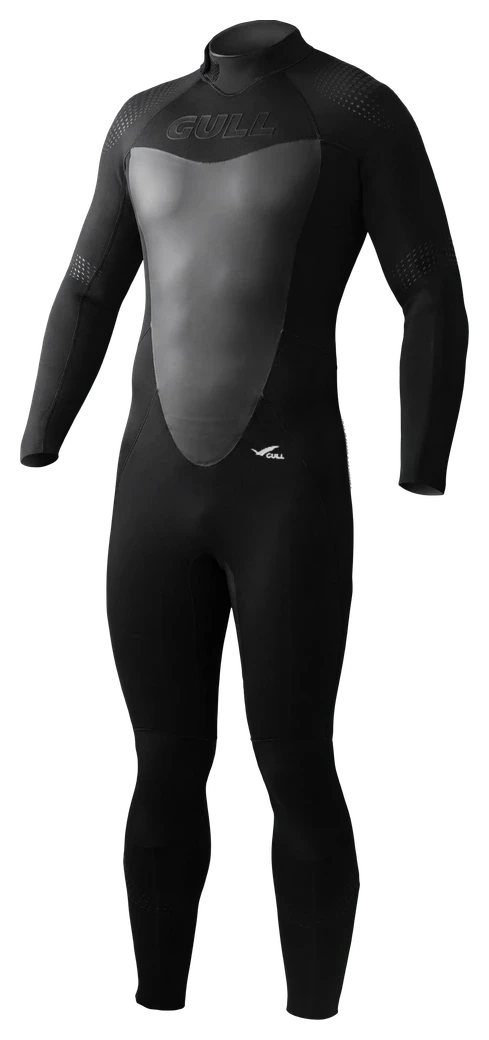
- GULL 3MM FULL SUIT (men's · women's): a one-piece full suit from GULL's Black Edition line. GULL says the Embossed FIR lining absorbs your body heat and sends it back to you. The Soft Skin torso sheds water and blocks wind, which helps during windy breaks on the boat, Super Grip on the shoulders takes the friction from your BCD, and grips inside the wrists and ankles hold the cuffs in place so water doesn't seep in.
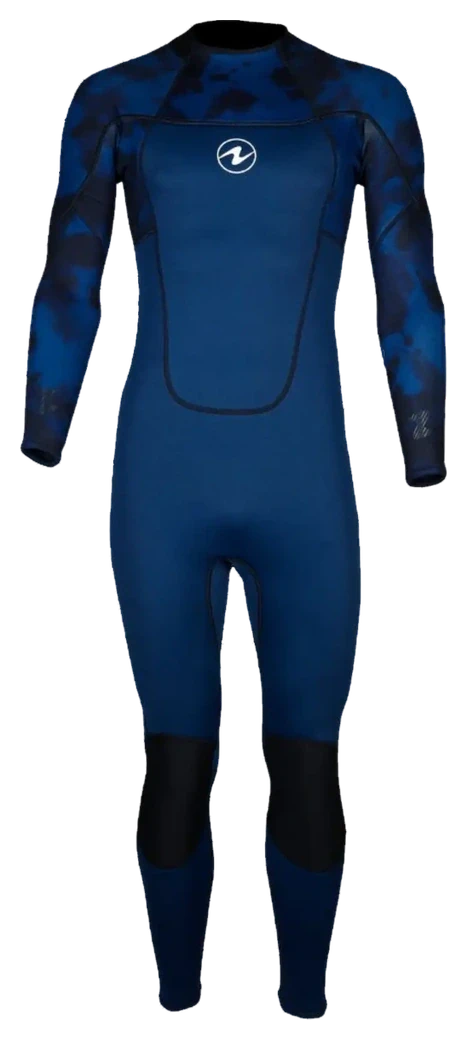
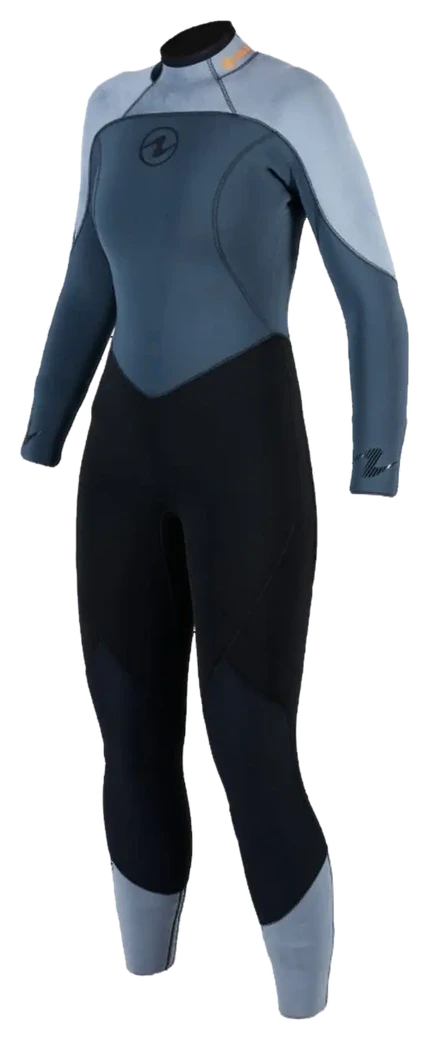
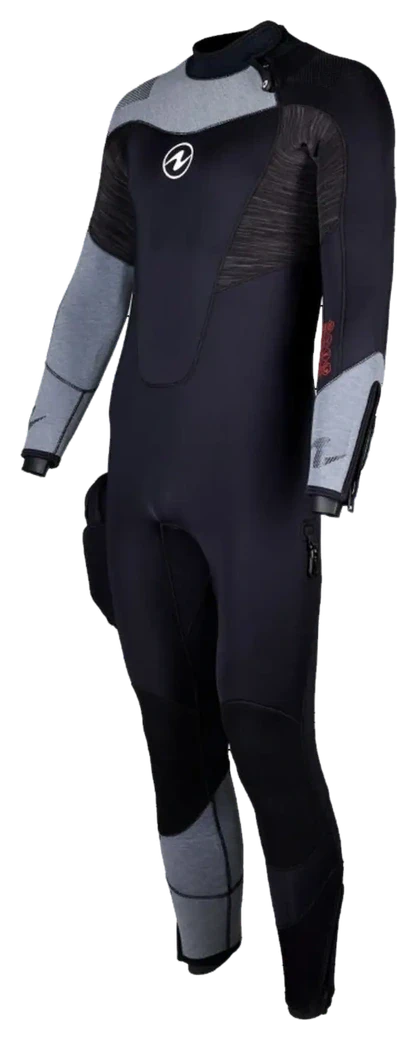
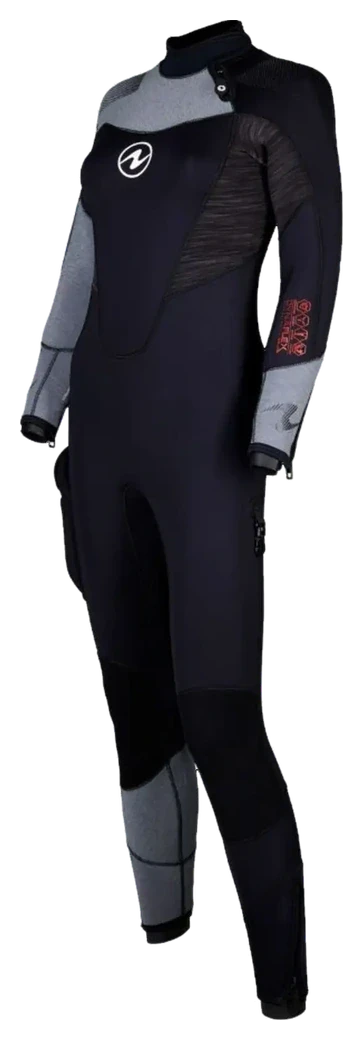
- Aqualung Hydroflex 3mm (men's · women's): a one-piece full suit in Super Stretch neoprene, which Aqualung says has three times the stretch of standard neoprene, for easy dressing and freedom of movement. O-ring seals at the wrists and ankles limit water entry, a printed wrist design helps keep your dive computer in place, and it has a laminated chest panel against wind and abrasion, Powertex knee panels and printed shoulders against BCD wear.
- Aqualung AquaFlex 3mm (men's · women's): one piece of petroleum-free 4-way stretch neoprene with a semi-dry zipper system and Powertex knee protection. Aqualung lists it for warm water and travel.
- Aqualung FitFlex 3mm (men's · women's): a two-piece, with a separate jacket and pant, which Aqualung says dresses faster and easier than a one-piece, made quick to put on and take off over multiple dive days. A connection system keeps the suit in place and reduces flushing, and it has Powertex kneepads and a thigh pocket. Aqualung also lists it for warm water and travel.
- Aqualung Hydroflex Shorty 3mm (men's · women's): a shorty that Aqualung makes for short trips in the water, snorkelling and surface activities. Super Stretch neoprene, flatlock seams that are comfortable against bare skin, a V-shaped collar, a laminated chest panel against wind and abrasion, and printed shoulders against BCD wear.
5 mm and 5.5 mm
- Aqualung AquaFlex 5mm (men's · women's): built like the AquaFlex 3mm, with petroleum-free 4-way stretch neoprene, a back zip with a long pull strap (a semi-dry zipper system) and Powertex kneepads, but 5 mm thick, the thickness PADI matches with temperate water. It adds Canadian seals, which Aqualung says limit water entry and add warmth.
- Aqualung DynaFlex 5.5mm (men's · women's): a full suit that Aqualung makes "for all your cold-water dives". Ultraspan outer fabric covers four-way stretch neoprene, the seams are double-glued, stitched and sealed on the inside, and the arms and legs have double water seals with zips. It closes with a G-Lock back zip with a double flap, plus a zip at the front of the neck. A removable 3D pocket sits on the right thigh, and a rubber loop on each arm holds a computer.
7 mm and 8/7 mm: PADI matches 7 mm with cold water
- Aqualung AquaFlex 7mm (men's · women's): the same as the AquaFlex 5mm, Canadian seals included, but 7 mm thick.
- Aqualung DynaFlex 7mm (men's · women's): the same build as the DynaFlex 5.5mm, G-Lock back zip included, but 7 mm thick.
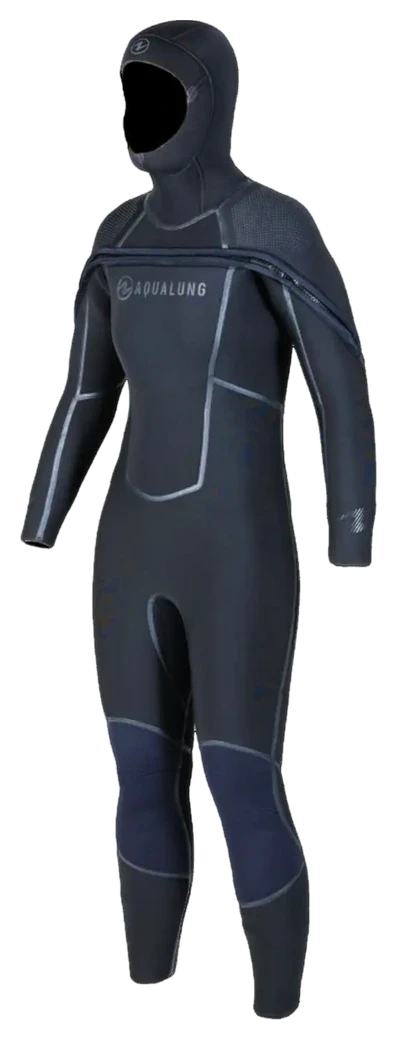
- Aqualung DynaFlex 7mm with Hood (men's · women's): 7 mm DynaFlex with an attached hood. On the men's suit, the hood has a face seal and a purge system on top, and Aqualung says the long YKK no. 10 front zip lets you put the suit on and take it off by yourself. For the women's suit, Aqualung's page gives no hood details and doesn't make the zip position clear, so confirm with us on LINE before you order.
- Aqualung Iceland 7mm (men's · women's): a 7 mm suit that Aqualung calls semi-dry, the style PADI describes above, where you still get wet. A TIZIP dry zip limits water entry, and Aqualung says its seals greatly reduce water entry at the neck, wrists and ankles. Triple-stitched seams are coated with Liquid Fusion, a removable hood comes with it, and it has a large cargo pocket.
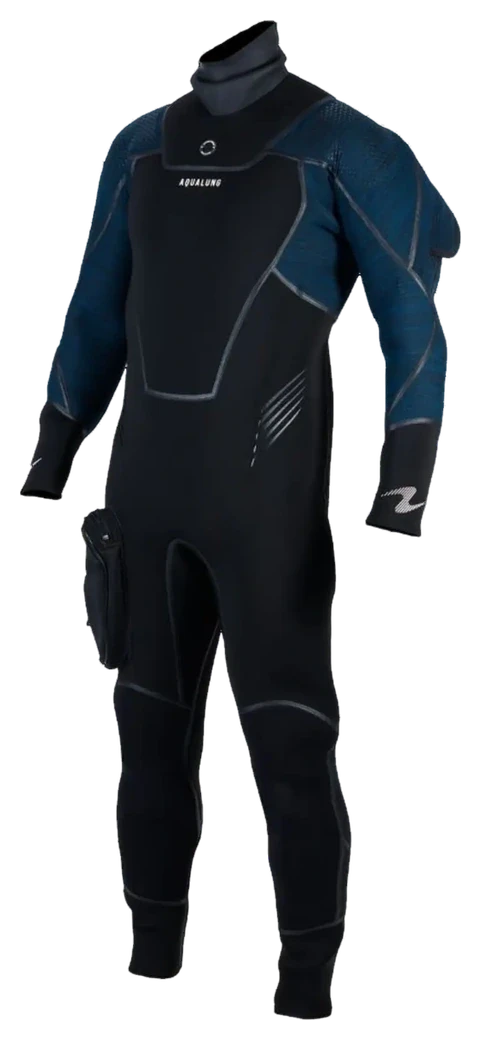
- Aqualung SolaFlex 8/7mm (men's · women's): 8 mm on the torso and 7 mm on the arms and legs, with a fleece liner for extra warmth. Aqualung says it keeps the features and fit of the earlier Sola Fx and improves the warmth. It has Canadian cuffs, a water dam over the neck and shoulders, triple-stitched seams coated with Liquid Fusion, and Powertex kneepads.
Wetsuit prices on our site
| Model | Thickness | Style | Price on our site |
|---|---|---|---|
| GULL 3MM FULL SUIT men's · women's | 3 mm | Full suit | ฿16,800 |
| Aqualung Hydroflex 3mm men's · women's | 3 mm | Full suit | ฿6,990 |
| Aqualung AquaFlex 3mm men's · women's | 3 mm | Full suit | ฿11,590 |
| Aqualung FitFlex 3mm men's · women's | 3 mm | Two-piece | ฿19,390 |
| Aqualung Hydroflex Shorty 3mm men's · women's | 3 mm | Shorty | ฿5,990 |
| Aqualung AquaFlex 5mm men's · women's | 5 mm | Full suit | ฿13,490 |
| Aqualung DynaFlex 5.5mm men's · women's | 5.5 mm | Full suit | ฿20,690 |
| Aqualung AquaFlex 7mm men's · women's | 7 mm | Full suit | ฿16,290 |
| Aqualung DynaFlex 7mm men's · women's | 7 mm | Full suit | ฿21,490 |
| Aqualung DynaFlex 7mm with Hood men's · women's | 7 mm | Full suit, attached hood | ฿21,490 |
| Aqualung Iceland 7mm men's · women's | 7 mm | Semi-dry, according to Aqualung | ฿28,390 |
| Aqualung SolaFlex 8/7mm men's · women's | 8 mm torso, 7 mm arms and legs | Full suit | ฿21,490 |
Where to buy a wetsuit in Thailand
Buy from an authorised dealer and you get the brand's warranty. Dive Records is an authorised dealer for GULL and Aqualung, as well as SCUBAPRO · Apeks · Dive Rite. For the rest of the kit a beginner meets, see our scuba gear list.
For now, orders go through LINE at @diverecords. Pick the model and size on the product page, then tap the LINE order button and the details go into the chat. Between sizes? Ask us first. Aqualung's pages show no size chart, so for the Aqualung models, ask us on LINE before you order. Shipping within Thailand is free from ฿2,000; below that, we quote the fee in the chat before you pay.
If the size isn't right, you can exchange it within 7 days of receiving it. The suit must be unused, never taken into the water, with tags and packaging complete. Exchanges are for the same model in another size, subject to stock, and you pay shipping both ways unless we sent the wrong item or it is defective. Full terms are on our shipping and returns page.
New to diving? Watch our beginner mistakes to avoid video next.
FAQ
What is a wetsuit, and what does it do?
A wetsuit is a neoprene dive suit that keeps you warm in the water and helps protect you from cuts, scrapes and stings (PADI). You still get wet inside, but a close fit stops too much water flowing in and out (DAN).
What thickness wetsuit do I need for warm water?
PADI matches 3 mm with warm water and says shorties are best for water of 27°C and above. Everyone feels the cold differently (DAN), so if you're unsure, ask a dive shop where you plan to dive.
Which wetsuit brand is best?
The one that fits you. PADI says fit is the most important factor: try several suits, narrow down by fit and comfort first, then decide on style, colour and features. On our site you'll find wetsuits from GULL and Aqualung.
How much does a wetsuit cost?
When this guide was written, our wetsuits ran from ฿5,990 (Aqualung Hydroflex Shorty 3mm) to ฿28,390 (Aqualung Iceland 7mm); the GULL 3MM FULL SUIT is ฿16,800. Each suit's price is in the table above; we confirm price and stock on LINE when you order. A DAN article explains that price follows materials: suits of pure neoprene and high-stretch fabrics tend to cost more, while cheaper suits often have less neoprene and may wear down more quickly, turning stiff and hard to put on.
How is a women's wetsuit different from a men's?
PADI recommends that women choose a women's suit, designed to better fit the female form. Each has its own size chart, so the same size letter means different measurements.
What's the difference between a wetsuit and a drysuit?
A wetsuit stays wet inside, fits close, moves easily and suits warmer water. A drysuit keeps water out, warms you with the air inside, is made for cold water and needs extra training. PADI says water below 10°C demands a drysuit.